In today’s digital world, websites constantly struggle to make their content stand out in the vast sea of online information. The pressure to produce fresh content is extreme, leading to the concept of content velocity. This refers to the rate at which you create and publish valuable content. While a steady stream of content is crucial, a harsh reality exists: content velocity alone isn’t enough. This highlights the need for effective content discoverability strategies to ensure your valuable content reaches the right audience at the right time
Understanding the Two Pillars: Content Velocity & Content Discoverability

Content Velocity: Imagine your content creation process as a conveyor belt. Content velocity acts as the engine that keeps this belt moving consistently. It ensures a steady flow of high-quality content, just like a conveyor belt efficiently delivers products. It’s like an efficient factory line, churning out products (content) that keep your audience informed and engaged. But what happens if the conveyor belt malfunctions?
Content Discoverability: Imagine creating a treasure chest overflowing with valuable content, but without the key, it remains hidden and inaccessible. Discoverability strategies are the tools that help you unlock this treasure chest and showcase its contents to the world. This includes tactics like SEO, social media promotion, and user engagement, all working together to enhance visibility and reach across digital platforms.
When Content Velocity Can Hurt Your SEO (⚠️)
While content velocity is important, prioritizing quantity over quality can negatively impact your SEO (Search Engine Optimization). Here’s how:
Thin Content: In a rush to publish content quickly, you might sacrifice on the quality. Thin content, lacking depth and value, gets penalized by search engines.
Keyword Stuffing: Overusing keywords can make your content unnatural and difficult to read, which search engines penalize.
Neglecting Internal Linking: Without proper internal linking, you miss opportunities to improve SEO by helping search engines understand your content structure.
Velocity Without Target: Why Content Gets Lost
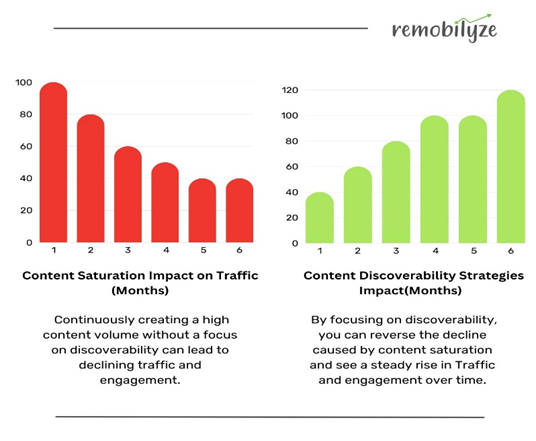
Rapid content creation seems like a winning strategy, but without discoverability, it can backfire:
Content Saturation: The internet is overflowing with information. Without discoverability strategies, your content risks getting lost.
Missed Opportunity Without Discoverability Strategies: Even insightful content won’t impact if your target audience can’t find it. Think of it as a buried treasure—valuable but hidden.
Why Content Velocity Needs Discoverability?
High-quality content is only part of the puzzle. Content velocity keeps the flow steady, but without discoverability, even the best content remains unseen.
Why Your New Content Might Not Be Discovered?
You’ve invested a lot of time and effort into crafting valuable content, but it seems lost on the internet. Several factors can prevent even the most stellar content from achieving discoverability, especially when it comes to new content. Here, we’ll explore these issues and delve into how Google Search Console (GSC) empowers you to ensure your new content gets the recognition it deserves.
Here are the two main reasons why your new content might not be showing up:
Indexing Delays: Search engines like Google take some time to discover your new content and add it to their vast index.
Indexing Issues: Technical problems can prevent your content from being indexed altogether. Here’s where Google Search Console (GSC) becomes your hero.
Fixing Indexing Issues with GSC
GSC is a free tool from Google that helps website owners monitor their website’s health and performance in search results. Let’s see how GSC can help you troubleshoot and fix common indexing issues:
“Noindex” Meta Tag: This tag instructs search engines not to index a page. It’s possible this tag was accidentally applied to your new content.
Here’s how you can fix it:
- Login to GSC and navigate to the Index tab then click on Pages.
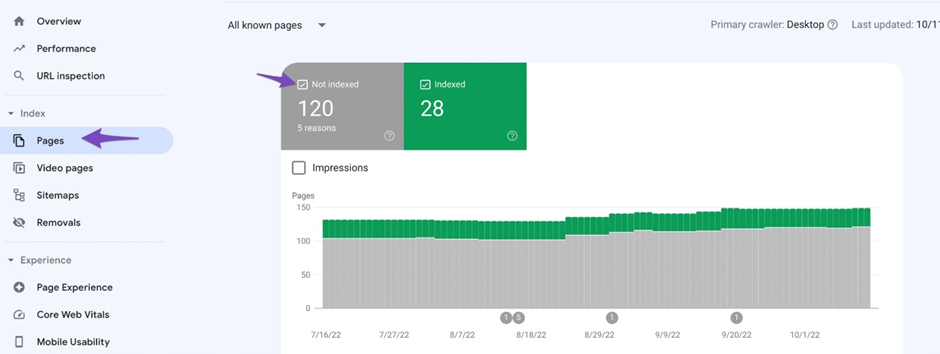
- Once you click on the not indexed tab it will list down the reasons why pages aren’t indexed.
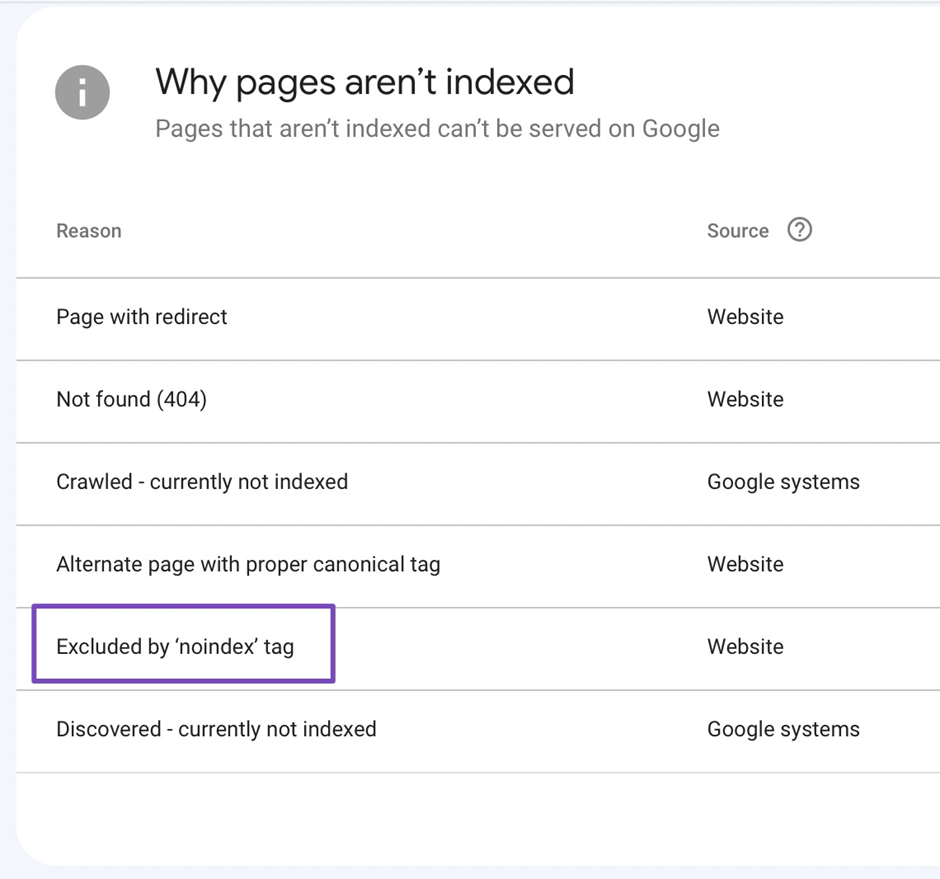
- Once you have identified the pages you want to be indexed, you need to remove the “no index” tag from those pages.
Robots.txt Blocking: Your robots.txt file controls which pages search engines can crawl and index. If your robots.txt file accidentally blocks your new content, it won’t be seen.
- Use GSC’s URL Inspection Tool: Enter the URL of your new content and GSC will tell you if your robots.txt file is blocking it. You can then edit your robots.txt file to allow Google to crawl and index the page.
Once you’ve addressed these indexing errors with GSC, you can use the URL Inspection Tool to request Google to index your new content. This can speed up the process of having your content appear in search results.
We’ll delve deeper into diagnosing and fixing indexing problems in the next article. For now, let’s focus on creating high-quality content, and be sure to check Google Search Console (GSC) for any indexing errors.
Additional Methods to Diagnose Why Your Content isn’t Indexed and What you can do to get it seen in Search Results:
1. Search Intent Mismatch
Problem: Your content doesn’t address the user’s search query (search intent).
Solution: Analyse the keywords you’re targeting. Search for those keywords yourself and see what kind of content ranks at the top. This will give you clues about what users expect to find.
2. Poor User Experience (UX)
Problem: Your website is slow, difficult to navigate, or hard to read. This discourages users and sends negative signals to search engines.
Solution: Focus on improving your website’s UX. Use tools like Google Page Speed Insights to optimize loading speed. Enhance navigation with clear menus. Break up text with images, videos, and headings. Ensure all functionalities work properly.
3. Duplicate Content Issues
Problem: Your website has identical content on multiple pages. Search engines prefer unique content and might not index duplicates.
Solution: Regularly check for duplicate content using tools like Screaming Frog SEO Spider. You can either remove duplicate pages or set canonical tags to specify the preferred version for indexing.
The Power of User Engagement
User engagement signals content relevance and trustworthiness to search engines, potentially boosting its discoverability. When users find your content valuable and engaging, they’re more likely to spend time on your site, click through to other pages, and potentially share your content with others. Building Experience, Expertise, Authoritativeness, and Trustworthiness (E-E-A-T) further strengthens these positive signals. E-E-A-T can be improved through strategies like author bios with relevant credentials and backlinks from high-quality sources. Learn more about how to improve E-E-A-T with schema markup.
The Mysterious Role of Navboost
A recent leak from Google suggests “Navboost” considers click data from Google Chrome to understand a webpage’s importance. Creating user-centric content that encourages engagement might enhance discoverability.
Here’s how you can build User Engagement for Discoverability
- Content Clusters for Deeper Dives: Structure your content around well-defined topic clusters. Create a central pillar page that offers a broad overview, then develop in-depth subtopic pages that delve deeper into specific aspects. Interlink these pages strategically to guide users on a journey of exploration within your chosen topic. This fosters user engagement and potentially sends positive signals to “navboost” about your website’s topical authority.
- Clear Navigation for Seamless Exploration: A website with clear navigation allows users to effortlessly find the information they seek. This reduces frustration and keeps them engaged, potentially improving click-through rates (CTR) and time spent on page – metrics that “navboost” might consider.
The Connection Between Discoverability and Content Velocity
Content velocity and discoverability are interdependent. While content velocity ensures a steady stream of valuable content, discoverability ensures that this content reaches and resonates with the right audience at the right time. This symbiotic combination is crucial for effective content marketing:
Here’s How Discoverability Impacts Velocity
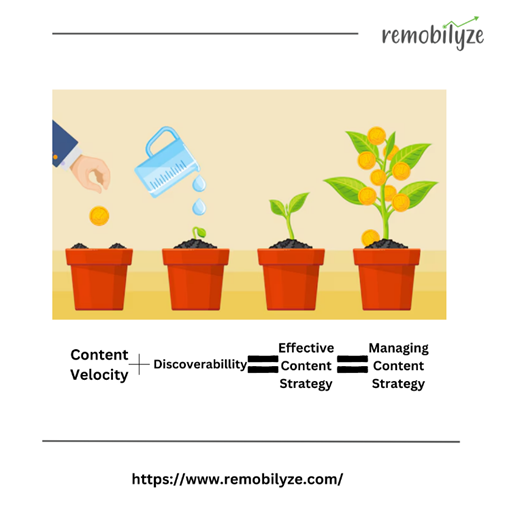
Imagine you’re a gardener planting seeds (creating content). These seeds need water (discoverability) to grow into healthy plants (reach your audience).
Planting Seeds (Content Velocity): Regularly creating content is like planting seeds in your digital garden.
Watering the Seeds (Discoverability): Using discoverability strategies helps your content reach more people, like watering seeds to help them grow.
Growing Healthy Plants (Effective Content Strategy): A well-maintained content strategy flourishes, engaging your audience and driving growth.
Tending Your Garden (Managing Content Strategy): Regularly manage and optimize your content strategy to ensure continuous growth. This involves monitoring what works and adjusting your discoverability efforts as needed.
Case Study: The Power of Content Discoverability
In my content marketing journey, I experienced first-hand the critical balance between content velocity and content discoverability. For about a year, I focused on producing content at a rapid pace, publishing several well-written and informative blog posts per week on my website. Despite this effort, the traffic growth was slow and disappointing. Analytics revealed that while I was creating substantial content, barely anyone was finding it.
Identifying the Gap: Content Velocity vs. Discoverability
Digging deeper, I realized I had focused solely on content velocity, neglecting the crucial aspect of discoverability. My content, no matter how valuable, was lost in the vast ocean of the internet.
Here’s how I identified the discoverability gap:
Limited Organic Traffic: Analytics showed minimal traffic from search engines, indicating my content wasn’t being indexed properly or ranking well.
Low Brand Awareness: Social media engagement and referral traffic were negligible, suggesting a lack of overall brand awareness.
Content Velocity: High
Content Discoverability: Low
Implementation:
To bridge the discoverability gap, I implemented a multi-pronged approach:
1. Fixing Indexing Issues:
Google Search Console (GSC): This free tool from Google proved invaluable. I utilized the Coverage Report to identify any unindexed pages and the URL Inspection Tool to diagnose specific indexing problems for individual URLs. Common issues included accidental “no index” tags and “robots.txt” restrictions. By addressing these issues, I ensured search engines could crawl and index my content effectively.
2. Optimizing for Search Engines (SEO):
Keyword Research: I conducted in-depth research to identify relevant keywords that my target audience was searching for. I then strategically integrated these keywords throughout my content while maintaining readability.
Meta Description Optimization: I crafted compelling and informative meta descriptions for my content, enticing users to click on search results.
3. Content Promotion and Social Media Engagement:
Strategic Social Sharing: I actively shared my content on relevant social media platforms, fostering engagement and driving traffic to my website.
Community Participation: I actively participated in online communities and forums within my niche, establishing myself as a thought leader and attracting visitors back to my content.
4. Prioritizing User Experience (UX):
Clear Website Navigation: I ensured my website had a clear and intuitive navigation structure, allowing users to find the information they seek effortlessly.
Content Refreshing: I regularly updated older content to ensure its freshness and relevance, keeping users engaged.
5. Using High-Quality Visuals:
High-Quality Images: Replaced generic stock photos with stunning, original photography (at least 1200px wide). Used custom images that vividly captured the essence of each blog topic.
Image Optimization: Optimized images with descriptive file names, alt text, and captions to ensure search engine discoverability and visual engagement. Added alt texts to images.
Hero Image Optimization: Utilized the “max-image-preview setting “for hero images to maximize their impact on Google Discover. Configured hero images to display prominently in Google Discover previews.
Positive Outcomes:
Within a few months, the results were remarkable:
- Significant Increase in Website Traffic: Overall traffic surged, indicating better content visibility.
- Improved User Engagement: Longer average session times, showing higher user interest and interaction.
- Higher Organic Search Traffic: Google’s recognition of my content’s value led to a substantial rise in organic search traffic.
- Appearance on Google Discover: Slowly but steadily, our content started appearing on Google Discover, increasing visibility and reach.
- Enhanced Social Media Influence: Strategic social media promotion attracted new visitors and boosted brand awareness.
Lessons Learned: A Balanced Approach is Key
This case study highlights the critical balance between content velocity and discoverability. While creating high-quality content is essential, it needs a discoverability strategy to reach its intended audience. Utilizing tools like GSC, implementing SEO best practices, and prioritizing user experience can significantly enhance content visibility. My journey from content velocity to discoverability serves as a testament to the power of a well-rounded effective content marketing strategy. Now that we’ve seen the transformative power of discoverability, let’s explore some key strategies you can implement to ensure your content reaches the right audience at the right time.
Strategies to Improve Content Discoverability
Creating great content is just the first step. To truly maximize its impact, you need to make sure your target audience can find it. Here are some key strategies to boost your content’s discoverability, with a particular focus on Google Discover:
1. Optimizing for Search Engines (SEO):
Search engines are the primary gateway for users to discover online content. By optimizing your website and content for relevant search terms, you can significantly improve your discoverability:
- Keyword Research: Identify the terms your target audience is searching for and integrate them naturally into your content. Tools like Google Keyword Planner can help with this process.
- Technical SEO: Ensure your website is mobile-friendly, has fast loading speeds, and uses clear and concise URLs. This not only improves user experience but also helps search engines crawl and index your content effectively.
- Meta Descriptions: Craft compelling descriptions that summarize your content accurately and entice clicks in search results.
2. Showing Up on Google Discover:
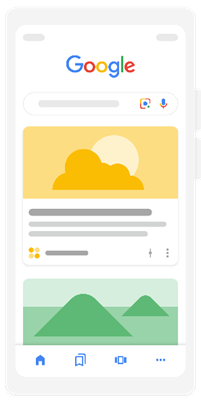
Google Discover is a personalized feed of content displayed on Android devices and the Google app. Unlike traditional search results, Google Discover prioritizes user interest and content that keeps them engaged. Here’s how to optimize your content for Discover:
- High-Quality Content: Google Discover prioritizes informative, engaging, and visually appealing content. Invest in creating valuable content that resonates with your audience. Focus on in-depth analysis, fresh perspectives, and well-researched information.
- Mobile-First Focus: Since most users access Discover on mobile devices, ensure your website and content are optimized for a seamless mobile experience. This includes:
- Fast loading speeds: Aim for a mobile page load time under 3 seconds.
- Responsive design: Your website should automatically adjust to different screen sizes.
- Easy-to-read fonts: Use clear and concise fonts that are large enough to read on a mobile screen.
- Captivating Visuals: Use high-quality images, infographics, or videos to grab attention and visually represent your content. Google recommends using large, high-resolution images (at least 1200px wide) with the “max-image-preview: large” setting. The Max Image Preview meta tag tells Google what size image to show in the preview when a publisher’s web page is shown in Discover.
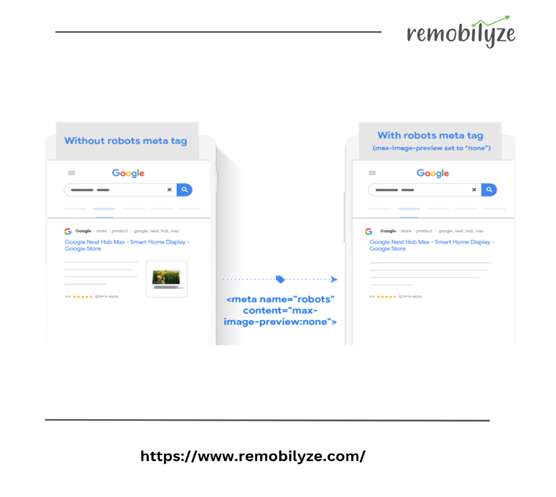
The part that’s labeled “robots” means that the meta tag is meant for software called “robots” that crawl the web looking for web pages.
The part that’s labeled “content” is the setting that tells Google what size image to show.
There are three settings: None, standard, and large.
- Engaging Titles and Headlines: Craft clear, concise, and informative titles that accurately reflect your content and entice users to click. Use strong verbs, numbers, and intrigue to spark curiosity.
- Post Regularly: Maintaining a consistent posting schedule can help your content appear more frequently in Discover. Google Discover rewards websites that consistently produce fresh, high-quality content.
- Optimize for User Engagement: Keep users engaged on your site by structuring your content for easy navigation. Use bullet points, subheadings, and short paragraphs to break up text and improve readability. Additionally, consider internal linking to relevant content on your website to keep users exploring.
Remember: Google Discover is constantly evolving, and there’s no guaranteed formula for success. However, by focusing on high-quality, user-centric content, mobile optimization, and visually compelling elements, you can significantly increase your chances of appearing in Google Discover and reaching a wider audience.
3. Utilizing Social Media Channels:
Social media platforms are powerful tools for content promotion and audience engagement.
- Share on Relevant Platforms: Promote your content on social media platforms where your target audience is active.
- Optimize for Sharing: Use eye-catching visuals and engaging captions.
- Engage with Your Audience: Respond to comments and participate in conversations.
4. Content Partnerships:
Collaborate with other content creators or brands in your niche.
- Influencer Marketing: Partner with relevant influencers to promote your content.
- Guest Posting: Contribute content to other websites to gain exposure.
- Content Syndication: Allow other websites to republish your content with proper attribution.
Conclusion:
While consistently creating high-quality content is crucial, true success hinges on combining content velocity with effective discoverability strategies. By prioritizing discoverability, you ensure your content reaches the right audience at the right time, maximizing its impact and achieving long-term SEO goals.